Advanced Training for Stability and Confidence: A Practitioner's Guide
Advanced training is the process of teaching a dog with the right temperament to distinguish a genuine threat from normal daily life, and to respond under full handler control. It is available for German Shepherds and other breeds with suitable working temperament, and it is a distinct discipline from basic obedience.
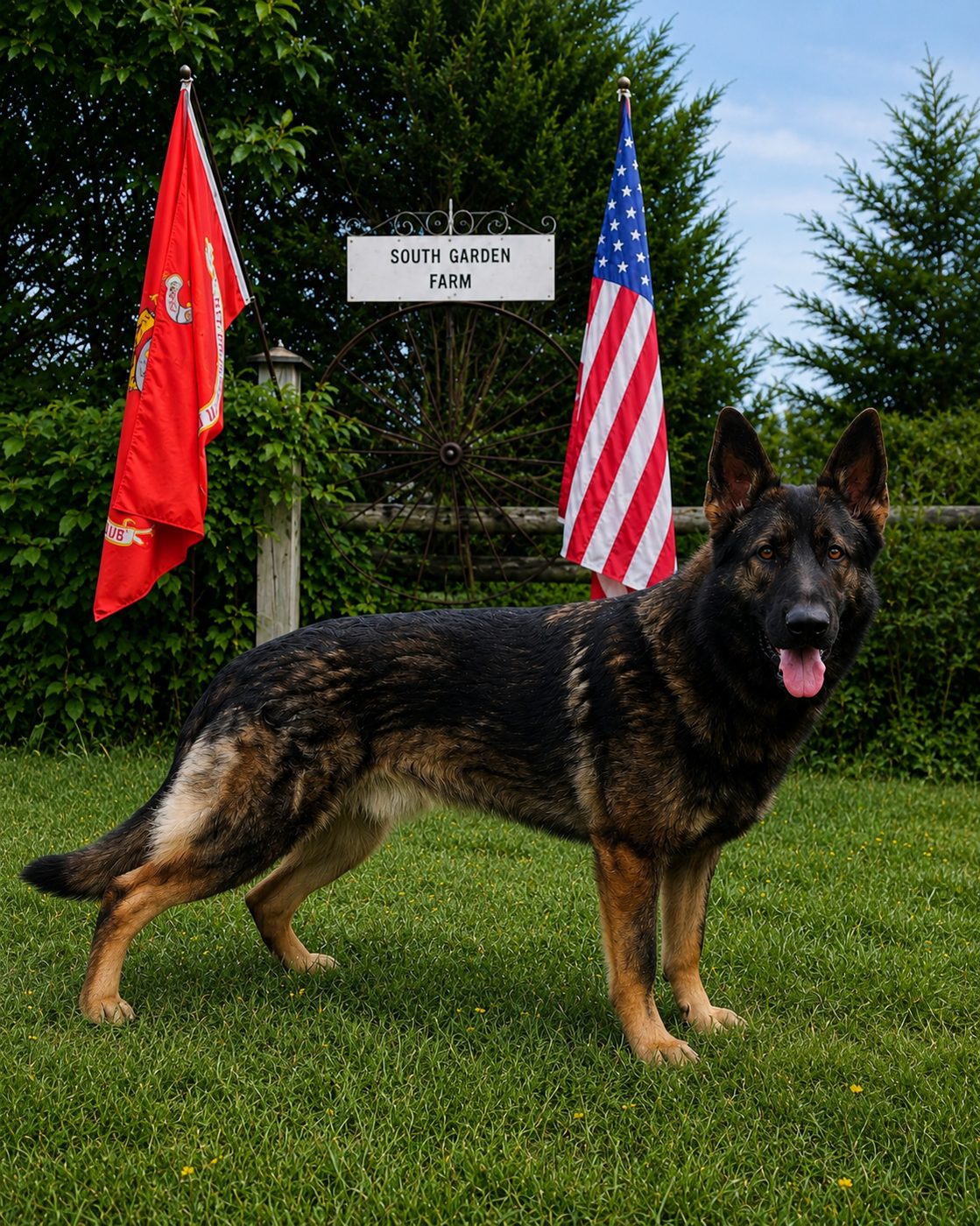
Most people’s mental image of this kind of training comes from movies: a dog that snarls at strangers and has to be locked in a back room when guests arrive. That is a poorly trained or poorly bred dog, not a well-trained one. A correctly trained dog is, for 99% of its life, indistinguishable from a well-mannered family dog. The training is precisely what makes that possible.
Is a dog trained this way safe around children and guests?
Yes, when the training is done correctly. A properly trained dog is taught to distinguish between an actual threat and normal daily life. Greeting guests, playing with children, and general household activity are unaffected. Uncontrolled aggression with no off-switch is a sign of poor training, not a stable, confident dog.
This is the question every serious buyer should ask a trainer directly, and the answer should come with a demonstration, not just reassurance.
What is Schutzhund/IGP, and why does it matter for evaluating a trainer?
Schutzhund (now formally titled IGP/IPO) is a three-phase competitive sport testing tracking, obedience, and controlled work under independent judging. A trainer or breeder with real competition titles, not just self-described experience, has had their methods tested in public, against other handlers, under rules they don’t control.
Full explanation: what Schutzhund/IGP training tests.
How does obedience training relate to advanced work?
Advanced work is built entirely on top of reliable obedience. A dog that won’t hold a solid “out” or “down” command under normal conditions has no business doing bite work. Any trainer who skips or rushes the obedience foundation to get to the more advanced phase faster is cutting a corner that shows up later, usually at the worst possible moment.
What should I ask before hiring a trainer?
Ask for the trainer’s own competition results, not just client testimonials. Ask to see a trained dog work in person, including the release/out command: the “off switch” is the single most important thing to verify before you hand over money. Ask how many hours of foundation obedience happen before any bite work starts. A trainer who can’t answer these specifically, or who gets impatient with the questions, is not someone to trust with a working dog.
Why do championship titles and World Team selection matter here?
Kevin A. Lanouette holds New England Regional titles from 2005 and 2006 (a third result in 2010 is still being confirmed from the records), made the U.S. World Team four times, and competed at the World Championships in 2006, 2007, and 2010. That’s not a one-time credential from years ago; it’s a sustained track record validated under competition pressure, repeatedly, over decades.
Related reading
Frequently Asked Questions
- What is Schutzhund training, and does my dog need it?
- Schutzhund (now formally IGP/IPO) is a three-phase sport testing tracking, obedience, and controlled work under judged conditions. It is not required for a stable household dog, but it is the clearest public proof that a dog's training and temperament have been tested by independent judges, not just claimed by the trainer selling the dog.
- Is a dog trained this way safe to have around children and guests?
- Yes, when the training is done correctly. A properly trained dog is taught to distinguish between an actual threat and normal daily life; greeting guests, playing with children, and general household activity are unaffected. Aggression on command with no off-switch is a sign of poor training, not a stable, confident dog.
- Is it better to buy a puppy or a fully trained adult German Shepherd?
- A puppy costs less and lets you shape the dog from day one, but requires 18 to 24 months of consistent obedience and socialization before advanced training is complete. A fully trained adult costs more up front but is working-ready immediately, the right call for buyers who need a stable, ready dog now, not in two years.